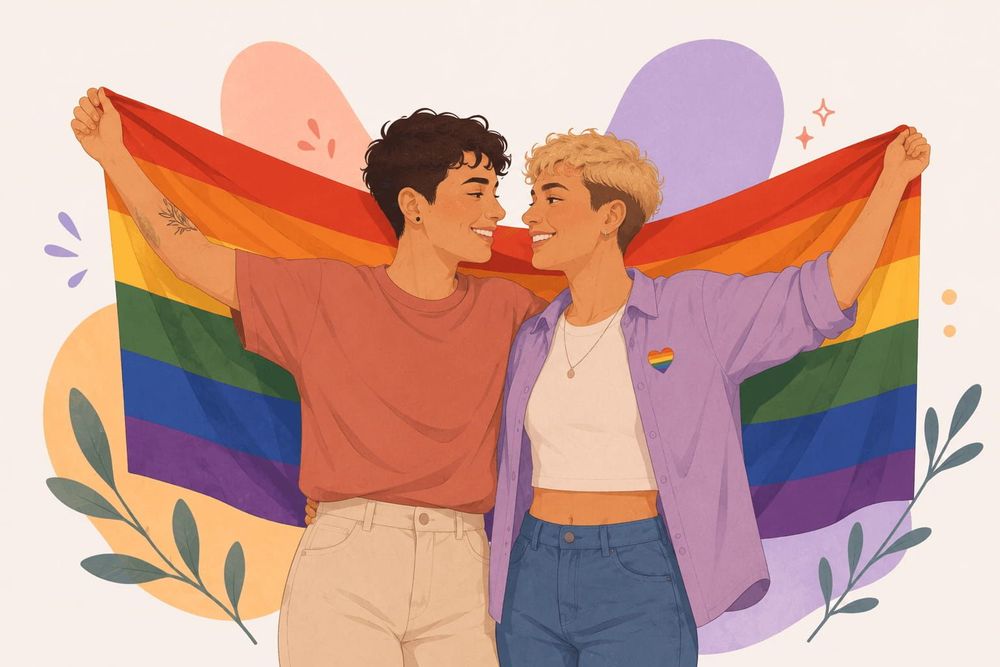
Queer & neurodivergent: Warum diese Verbindung kein Zufall ist

Viele neurodivergente Menschen berichten, dass sie nicht nur ihr Gehirn als „anders" erleben, sondern auch ihre Identität. Kein Wunder: Studien zeigen eine deutliche Überschneidung zwischen Neurodivergenz und queeren Identitäten. Was Queerness bedeutet, warum beide Erfahrungen so häufig zusammenkommen und was das für dich bedeuten kann, erfährst du hier.
Was dich im Artikel erwartet
Autor:innen
Expert:innen
Quellen
- Dewinter, J., De Graaf, H. & Begeer, S. (2017). Sexual Orientation, Gender Identity, and Romantic Relationships in Adolescents and Adults with ASD. Journal of Autism and Developmental Disorders. National Library of Medicine (abgerufen am 31.05.2026):
- Libster, N. et al. (2025). Associations Between Negative Social Experiences and Depressive Symptoms in Autistic Sexual and Gender Minority Youth. Journal of the American Academy of Child & Adolescent Psychiatry Open. National Library of Medicine (abgerufen am 31.05.2026):
- National Library of Medicine – Divergent Desires: Sexual Expression in ASD and ADHD Individuals (abgerufen am 31.05.2026):
- Pecora, L. A. et al. (2020). Gender identity, sexual orientation and adverse sexual experiences in autistic females. Molecular Autism. National Library of Medicine (abgerufen am 31.05.2026):
- SPARK for Autism – Researchers Examine the Stress of Being Autistic and LGBQ+ (abgerufen am 31.05.2026):
https://sparkforautism.org/discover_article/stress-autistic-lgbq/
- The Brain Charity – LGBTQIA+ and neurodiversity (abgerufen am 31.05.2026):
https://www.thebraincharity.org.uk/lgbtqia-neurodiversity-neurodivergent-lgbtq/
- Warrier, V. et al. (2020). Elevated rates of autism, other neurodevelopmental and psychiatric diagnoses, and autistic traits in transgender and gender-diverse individuals. Nature Communications. National Library of Medicine (abgerufen am 31.05.2026):
Weiterlesen in der knotted-App
Der vollständige Artikel — inklusive Community-Diskussion — lebt in der App.